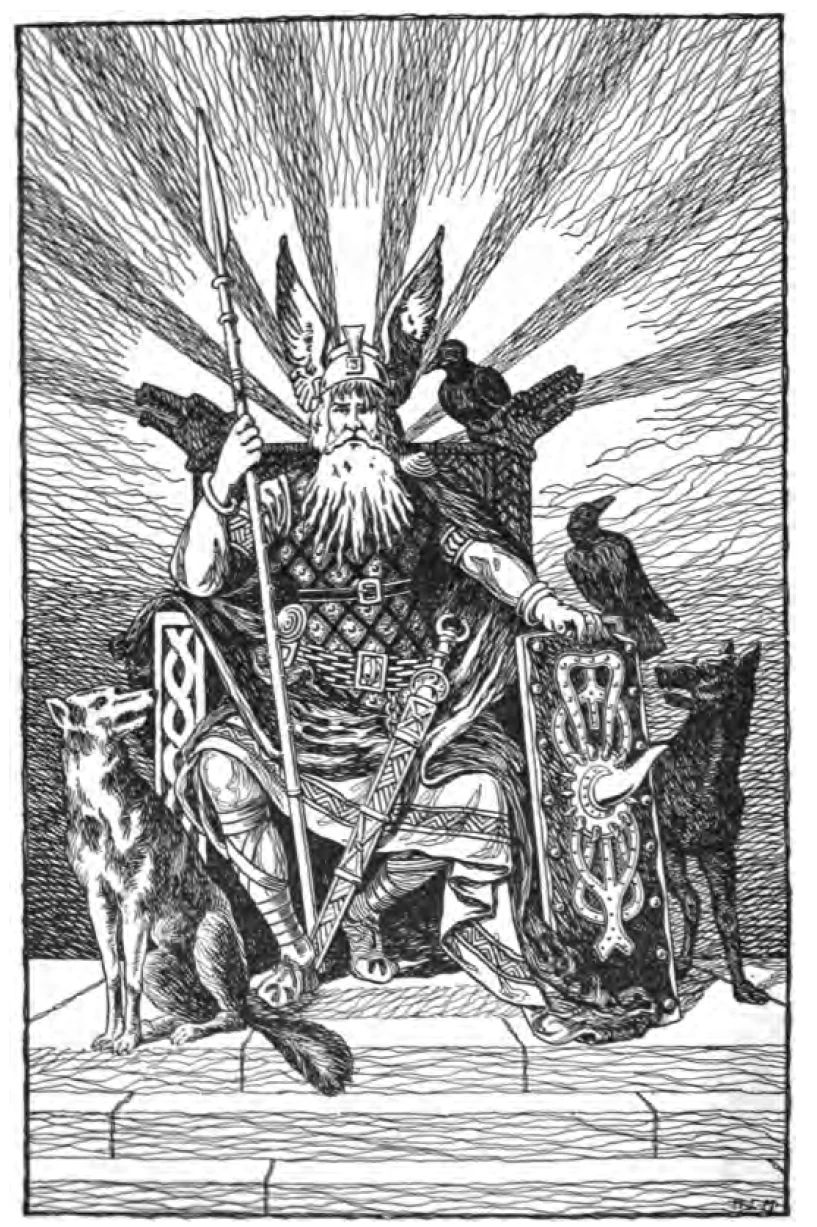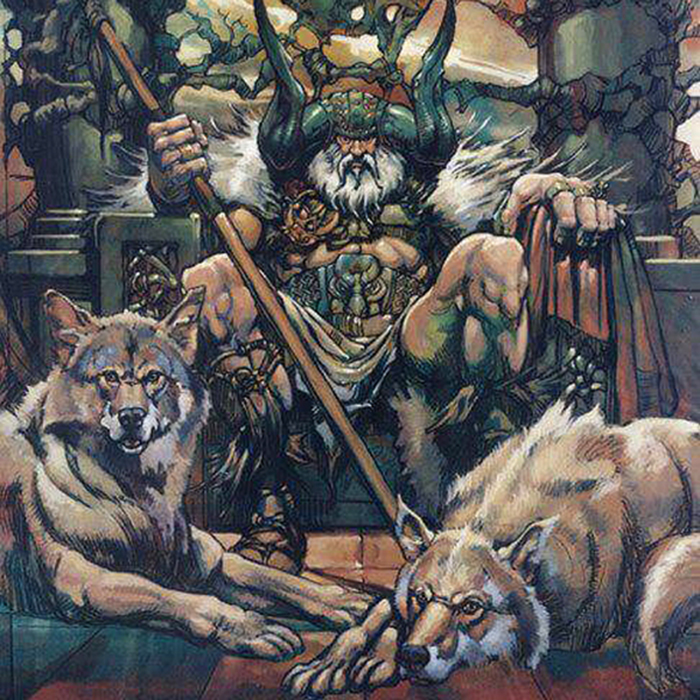
In norse mythology, geri and freki (old norse, both meaning the ravenous or greedy one) are two wolves which are said to accompany the god odin. They are attested in the poetic edda, a collection of epic poetry compiled in the 13th century from earlier traditional sources, in the prose edda, written in the 13th century by snorri sturluson. Lux ferre october 17, 2017.
Freki and geri (greedy and ravenous) in norse mythology, two wolves who sit by odin, chief of the gods, when he feasts. Odin gives them all of the food set before him and drinks only wine, since food and wine are the same to the god. They appear in the poetic edda and the prose edda.
In norse mythology, it is believed that these two wolves populated the earth with their offspring (as they were a female and a male wolf) while traveling with odin. In return, geri (meaning. Discover their amazing story.
Touch device users can explore by touch or. In norse mythology, geri and freki (old norse, both meaning the ravenous or greedy one) are two wolves which are said to accompany the god odin. They are attested in the poetic edda, a collection of epic poetry compiled in the 13th century from earlier traditional sources, in the prose edda, written in the 13th century by snorri sturluson.
In norse mythology, geri and freki (old norse, both meaning the ravenous or greedy one) are two wolves which are said to accompany the god odin. They are attested in the poetic edda, a collection of epic poetry compiled in the 13th century from earlier traditional sources, in the prose edda, written in the 13th century by snorri sturluson, and in the poetry of skalds. Geri and freki (from old norse, where both names mean the greedy or the ravenous), in norse mythology, are two wolves that accompany the god odin. after a successful battle, odin walks over the bodies of his defeated adversaries while geri and freki devour their bodies.
During their dinners, odin gives all the meat to the wolves, as he feeds only on mead. Geri and freki (old norse the greedy and the gluttonous) are two wolves of norse mythology who, like the ravens huginn and muninn, accompany the god odin. according to the edda, geri and freki consume all the food served to odin in valhalla, while the latter feeds only on wine. Odin disdains boar's meat and mead.
Geri and freki and gere · see more » geri. Geri or geri may refer to. Geri and freki and geri · see more » huginn and muninn.
In norse mythology, huginn (from old norse thoughtorchard (1997:92). ) and muninn (old norse memoryorchard (1997:115). Or mindlindow (2001:186). ) are a pair of ravens that fly all over the world, midgard. Geri and freki are odin 's two wolves in valhalla, according to the eddic poem grímnismál.
Odin receives the same fare as the einherjar, but he gives it to the wolves, because he does not need food; Wine is both food and drink to him: But on wine only.
Geri and freki attested in snorri's 'prose edda' from the 13 th century prose edda book, gylfaginning we learn that odin fed his wolves, geri and freki, with hunks of the best meat. He did not need to eat, and wine alone was enough for his own needs. In norse mythology, wolves were both friends and enemies of the gods.
Geri and freki symbol meaning. Flanking odin at his feet, odin’s two loyal wolves geri (‘greedy’) and freki (‘ravenous’) guard him and keep him company. The names geri and freki are interpreted to mean either “the greedy one” or “the ravenous one. ”.
In the norse culture, wolves are perceived as both negative and positive. I’ve made my opinion above, just want opinions when our family votes. Jötunn is a giant in norse mythology, a member of a race of nature spirits with superhuman strength.
Their otherworldly homeland is. Odin, like shamans all over the world, [14] is accompanied by many familiar spirits, most notably the ravens hugin and munin, the wolves geri and freki, and the valkyries. The shaman must typically undergo a ritual death and rebirth in order to acquire his or her powers, [15] and odin underwent exactly such an ordeal when he discovered the runes.
As a figure in norse mythology, odin can be described as extremely versatile. From the earliest times, he was described as the god of war, but he also played a role of a protector of heroes. A key character in norse literature.
Ymir is a character that is well known throughout the wide range of norse literature and.